22 January 2026
“Crushed Paddles” Explained
Vancouver, BC – A “crushed” pickleball paddle where the honeycomb core collapses resulting in a “trampoline effect” where the ball is returned at a faster rate – reportedly up to 50% faster. Imperatively, this effect will result in a player unfair advantage, or worse, cause injury.
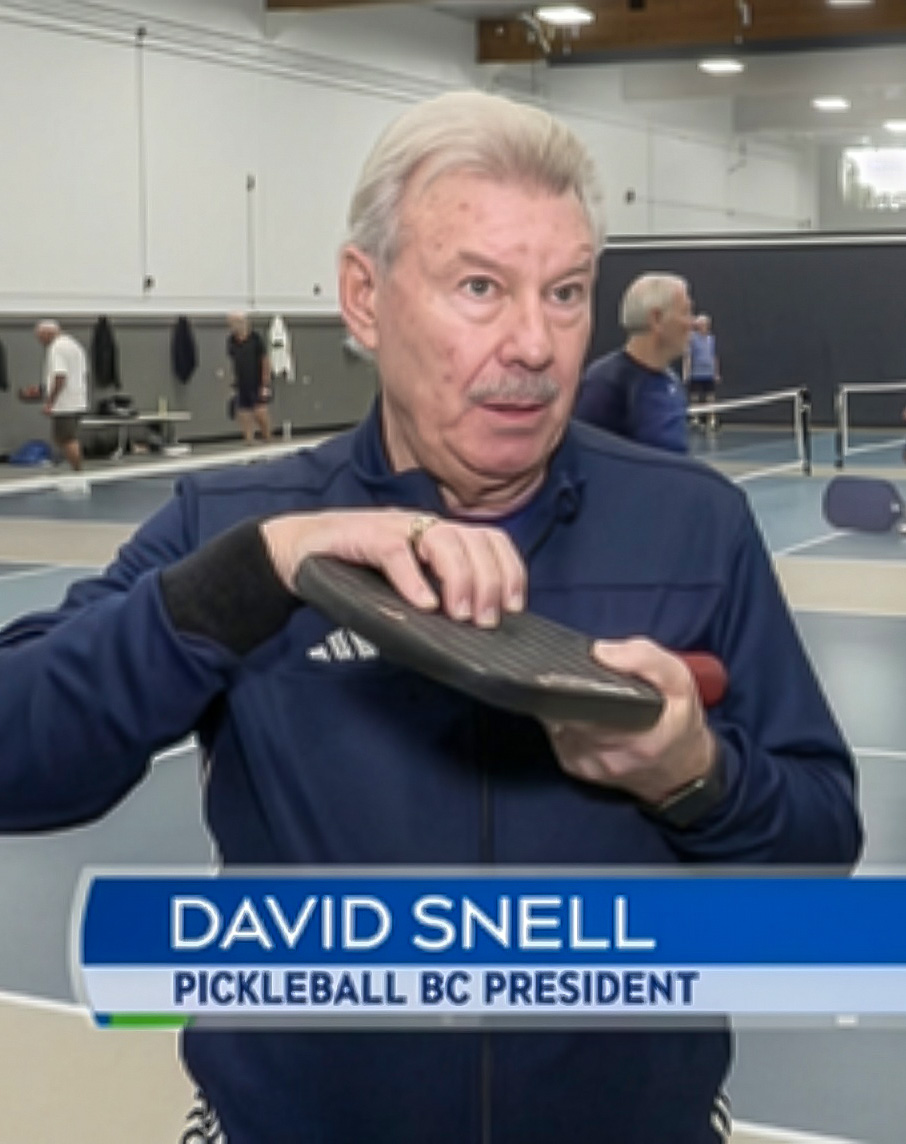
From Pickleball BC’s (“PBC”) January 15th 2026 “The Kitchen Sink” newsletter report, David Snell, PBC President, demystifies the term “Crushed Paddles”. This CTV News feature also explores the topic, where David was interviewed.
David Snell: “As paddle technology advances, players may hear the terms ‘crushed’ or ‘decompensated/delaminated’ paddles. According to the experts, this refers to paddles whose internal core—usually a polymer honeycomb but varies by manufacturer and model—has been permanently compressed or damaged over time.”
To be clear, PBC is told that this is not a base manufacturing issue nor necessarily malfeasance. This most often happens through normal use, repeated hard shots, edge impacts, or heat exposure (such as leaving a paddle in a hot car). When a paddle decompensates it may produce extra power (often described as a ‘trampoline effect’), inconsistent ball response, or a duller sound, and it may no longer meet certification standards for sanctioned play.
David goes on to explain PBC’s policy position: “We believe use of these decompensated paddles undermine fairness, safety, and consistency, making education, monitoring, and evolving standards essential as pickleball continues to grow.”
In this CTV News interview, Pickleball BC President David Snell provides methods on how one can check if their paddle is crushed, and, if so, suggests to purchase a new paddle to avoid unfair play and injury to others, and Leanne Schultz, Director of Shawnigan Lake Pickleball Club, Vancouver Island, talks about the “trampoline effect”.
What have the governing bodies done so far to address these issues? USA Pickleball (USAP) and Pickleball Canada (PCO) require paddles to meet certification standards and have a “USA Pickleball Approved” logo on the face of the paddle. USAP has initiated a Coefficient of Restitution (“COR”) test to measure paddle power and speed for their Sanctioned tournaments resulting in Go/No-Go decisions to take paddles off the approved list. Also the United Pickleball Association (UPA) and Association of Pickleball Players (APP) Tours have initiated a joint effort to combat the use of non-compliant and potentially dangerous equipment and are now using Go/No-Go equipment to identify non-conforming paddles. A paddle that has decompensated may no longer conform, even if it was originally approved. But there are enforcement challenges:
Can’t help saying: “Please wear protective eyewear and a reminder that at our upcoming BC Provincial Tournament protective eyewear is mandatory as is becoming more prevalent in our Clubs such as Vernon Pickleball Association.”
For more information, contact:
David Snell, PBC President
President@PickleballBC.ca